Introduction
The expansion of a federal investigation into a fake degree and marksheet scam linked to a medical college associated with Monad University has raised serious concerns across India’s education and healthcare sectors. Unlike general academic fraud, cases involving medical and professional qualifications carry far-reaching consequences, as they directly impact public safety, regulatory compliance, and institutional credibility.
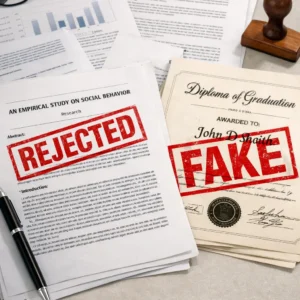
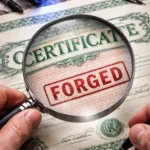
Authorities examining this case have identified irregularities that suggest the large-scale circulation of forged academic credentials. These documents, allegedly designed to appear legitimate, may have been used to mislead employers, licensing bodies, and regulatory authorities. The probe has drawn attention to how paper qualifications, when fabricated, can undermine trust in professional education systems.
Emergence of the Investigation
The probe gained momentum after inconsistencies were noticed during qualification verification processes linked to medical and allied health roles. Certain degrees and marksheets presented for employment or registration did not align with official academic records.
These discrepancies prompted deeper scrutiny by federal agencies, who began tracing the origin, format, and issuance patterns of the documents. As the investigation progressed, authorities uncovered signs of coordinated forgery rather than isolated incidents.
Nature of the Alleged Forged Documents
The documents under examination reportedly included:
Medical degree certificates
Academic marksheets reflecting course completion
Provisional certificates
Internship or training completion records
Supporting academic transcripts
What made these documents particularly concerning was their apparent use in professional fields where credentials are critical for patient safety and regulatory approval.
Risks of Fake Credentials in Medical and Professional Fields
Forgery linked to medical colleges poses risks far beyond employment fraud. When unqualified individuals gain access to healthcare or regulated professions using forged documents, the consequences can include:
Compromised patient safety
Violation of professional licensing laws
Loss of public trust in medical institutions
Legal exposure for employers and hospitals
Regulatory failures at multiple levels
This elevates the seriousness of the investigation and explains the involvement of federal agencies.
Institutional Association and Misuse of Academic Identity
The probe has also highlighted how associations with universities or medical institutions can be misused by fraudulent networks. Even when an institution is not directly involved, the misuse of its name, formatting, and academic structure can create an illusion of legitimacy.
Forgery networks often exploit:
Complex academic hierarchies
Limited public access to records
Delays in inter-institutional verification
Employers’ reliance on physical documents
This misuse damages institutional reputations and creates long-term credibility challenges.
Indicators of Organized Forgery Networks
Investigators reportedly observed patterns suggesting organized operations rather than individual misconduct. Such indicators include:
Similar formatting across multiple forged documents
Repetition of serial numbers or academic layouts
Use of professional-grade printing equipment
Consistent errors across different certificates
Financial trails linked to document procurement
These findings suggest the existence of structured networks capable of producing documents at scale.
Role of Middlemen and Unauthorized Facilitators
As in many academic fraud cases, unauthorized intermediaries are suspected to have played a central role. These individuals often position themselves as facilitators who can provide:
Medical degrees without attending college
Backdated marksheets
Accelerated qualifications
Documents tailored for regulatory submission
Candidates are often misled into believing these documents are officially issued or institutionally approved.
Implications for Employers and Regulatory Bodies
Employers, hospitals, and regulatory authorities face significant challenges when fake credentials enter the system. Consequences include:
Legal liability for employing unqualified professionals
Regulatory penalties
Operational disruptions during audits
Loss of institutional credibility
Mandatory re-verification of staff credentials
This case underscores the importance of rigorous credential verification in sensitive sectors.
Impact on Genuine Medical Graduates
The ripple effects of such scams also harm legitimate graduates. Increased fraud leads to:
Heightened scrutiny of all applicants
Longer verification timelines
Suspicion toward certain institutions
Additional documentation requirements
Genuine professionals may face delays and reputational stress due to actions they had no part in.
Federal Agencies and Expanded Scrutiny
The involvement of federal agencies reflects the scale and seriousness of the alleged scam. Their expanded role includes:
Coordinating with state authorities
Verifying academic records directly with institutions
Tracking document distribution channels
Investigating financial transactions
Identifying beneficiaries of forged credentials
The probe is expected to widen as more documents and users are identified.
Legal Consequences for Participants
Individuals found to have produced, sold, or knowingly used fake medical or academic documents may face:
Criminal prosecution for forgery and cheating
Disqualification from professional practice
Cancellation of employment or registration
Long-term bans from regulated professions
Severe reputational and financial consequences
Even indirect involvement can result in serious legal exposure.
Regulatory Gaps and Systemic Weaknesses
This case has also exposed systemic weaknesses that allow such fraud to occur, including:
Fragmented academic record systems
Limited digitization of older records
Inconsistent verification standards
Lack of centralized credential databases
Overreliance on paper documentation
Addressing these gaps is essential to preventing future incidents.
The Illusion of Paper Qualifications
Fake credential schemes thrive on the false belief that possession of documents is equivalent to education and competence. In professional fields, this illusion is particularly dangerous.
Paper qualifications without genuine training:
Endanger public welfare
Undermine professional standards
Collapse under verification
Lead to irreversible career damage
The investigation reinforces that academic integrity cannot be replicated through printing and forgery.
Importance of Strengthened Verification Mechanisms
This case emphasizes the need for:
Direct institutional verification
Secure digital record systems
Mandatory background checks
Coordination between regulators and employers
Continuous monitoring of professional credentials
Such measures protect both institutions and the public.
Broader Impact on the Education and Healthcare Ecosystem
Academic fraud linked to medical institutions affects:
National education credibility
International recognition of qualifications
Trust in healthcare systems
Student confidence in academic pathways
Regulatory authority effectiveness
Restoring trust requires systemic reforms and strict enforcement.
Conclusion
The expanded probe into fake degree and marksheet fraud linked to a medical college associated with Monad University highlights a serious threat to academic and professional integrity. By exposing how forged credentials can infiltrate regulated professions, the investigation serves as a warning against the dangers of treating education as a tradable commodity.