Introduction
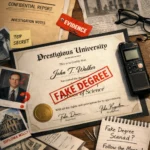
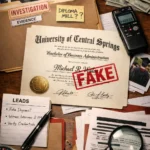
Beyond well-known fake universities and institutional scandals, India has witnessed the steady rise of independent fake degree bureaus operating outside any formal educational framework. These rackets do not claim to be universities. Instead, they function as underground document factories, producing forged degrees, mark sheets, transcripts, and certificates for individuals seeking jobs, immigration, or professional recognition abroad.
Police investigations across states such as Kerala, Karnataka, Tamil Nadu, Telangana, and Maharashtra have repeatedly uncovered such operations. These cases reveal a hidden ecosystem of fraud that thrives on desperation, lack of awareness, and the high demand for foreign employment.
What Are Independent Fake Degree Bureaus
Independent fake degree bureaus are illegal setups run by private individuals or small groups. They do not operate campuses, conduct classes, or claim academic recognition. Their sole purpose is document fabrication.
These bureaus specialize in creating certificates that appear authentic enough to pass initial scrutiny, especially when used for overseas employment or visa applications.
Why Overseas Job Seekers Are Primary Targets
The majority of clients for these rackets are individuals seeking employment in foreign countries. Many overseas employers require educational proof, and some applicants lack formal qualifications or hold incomplete degrees.
The promise of quick documents without study, exams, or verification makes these rackets appealing to vulnerable job seekers.
Common Documents Produced
Police seizures often include fake bachelor’s and master’s degrees, engineering certificates, nursing diplomas, IT qualifications, mark sheets, transcripts, experience letters, and migration certificates.
In some cases, entire academic portfolios are fabricated to match employer or immigration requirements.
Use of Fake Seals and Letterheads
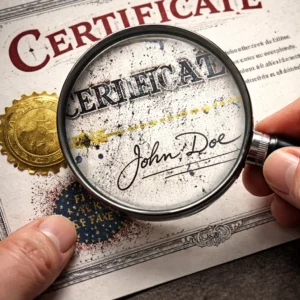
A recurring feature of these rackets is the possession of forged seals, emblems, and letterheads of Indian universities and boards. Some operators maintain extensive libraries of logos and templates to replicate authentic documents.
These materials are updated regularly to reflect current university formats.
Kerala Based Fake Certificate Operations
Kerala police have uncovered several cases involving large volumes of fake certificates intended for use in Gulf countries. Investigations revealed small printing units operating from residential buildings, producing documents overnight.
These rackets often worked closely with overseas agents who forwarded client details electronically.
Karnataka and Bengaluru Based Rackets
In Karnataka, especially Bengaluru, police have busted multiple operations producing fake IT, engineering, and management degrees. The city’s reputation as a tech hub made it a natural base for such activities.
Some rackets specialized in certificates from open and distance education programs to make the documents appear plausible.
Tamil Nadu and Chennai Networks
In Tamil Nadu, fake degree bureaus were found to be closely linked to travel agents and immigration consultants. Degrees were bundled with visa assistance, creating an illusion of legitimate overseas placement services.
Authorities found evidence of bulk printing and courier dispatches to foreign destinations.
Telangana and Hyderabad Based Operations
Hyderabad has seen cases where fake certificates were created specifically for healthcare and technical jobs abroad. Police recovered fake nursing, pharmacy, and paramedical certificates.
Such cases pose serious public safety risks when unqualified individuals enter critical professions.
How These Rackets Operate
Most operations follow a simple but effective model. Clients contact agents through word-of-mouth or online messaging platforms. Details are shared digitally, payments are collected in cash or informal channels, and documents are printed within days.
Finished certificates are delivered discreetly or sent directly overseas.
Pricing and Commercialization of Fraud
The cost of fake degrees varies based on urgency, qualification level, and target country. Higher fees are charged for degrees meant for regulated professions or immigration-heavy destinations.
This has turned fake education into a lucrative underground business.
Role of Middlemen and Recruiters
Middlemen play a crucial role in sustaining these rackets. Some operate as travel agents, job consultants, or placement coordinators who connect clients with document suppliers.
This layered structure makes detection difficult.
Police Investigations and Seizures
When police act on intelligence or complaints, raids often uncover thousands of printed certificates, blank mark sheets, laminating machines, high-quality printers, and digital storage devices.
Such seizures reveal the industrial scale of operations.
Legal Charges and Prosecution
Those arrested are typically booked under charges related to cheating, forgery, criminal conspiracy, impersonation, and use of forged documents.
Despite repeated arrests, new rackets continue to emerge due to persistent demand.
Impact on Genuine Graduates
Fake degree rackets damage the credibility of genuine Indian graduates. Increased scrutiny, stricter verification, and delayed hiring affect honest candidates seeking overseas opportunities.
The actions of a few undermine the reputation of many.
Risks for Clients Using Fake Degrees
Individuals who use forged certificates risk visa rejection, deportation, job termination, blacklisting, and criminal charges. In some countries, immigration fraud carries severe penalties.
Once detected, the consequences can be irreversible.
Why These Rackets Persist
Several factors contribute to the persistence of fake degree bureaus, including unemployment, migration pressure, limited awareness, and inconsistent verification mechanisms across borders.
As long as demand exists, supply finds a way.
Challenges in Detection
Many fake certificates go undetected initially because employers or agencies rely on visual checks rather than direct verification with issuing authorities.
Only when advanced verification or background checks occur does the fraud surface.
Need for Stronger Verification Systems
Centralized digital verification systems, international cooperation, and employer education are essential to curb the spread of fake academic documents.
Manual verification is no longer sufficient.
Responsibility of Job Consultants and Employers
Employers and recruiters must adopt zero-tolerance policies toward document fraud. Proper due diligence protects organizations from legal and reputational risks.
Ignoring verification can have serious consequences.
Public Awareness and Education
Awareness campaigns are critical to inform job seekers about the dangers of fake degrees. Many clients enter these arrangements without fully understanding the legal risks involved.
Education is the strongest deterrent.
Conclusion
Independent fake degree bureaus represent one of the most dangerous and least visible forms of academic fraud in India. Operating quietly across multiple states, these rackets exploit aspirations for better livelihoods while undermining the integrity of education and employment systems.
Police actions in Kerala, Karnataka, and other states have exposed the scale of the problem, but enforcement alone is not enough. Strong verification mechanisms, ethical recruitment practices, and public awareness are essential to dismantle this underground industry.
Education is a foundation of trust. When forged certificates replace genuine qualifications, the consequences are felt not just by individuals, but by society as a whole.