Introduction
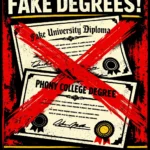
The exposure of a major fake degree racket operating from a cyber café in Lucknow has once again highlighted the growing sophistication of academic fraud in India. In a coordinated operation, police uncovered an inter-state gang engaged in producing and selling forged university degrees and certificates. The gang was found manufacturing fake B.Tech, BCA, MSc, BA and several other academic credentials, charging amounts ranging from fifteen thousand rupees to four lakh rupees per certificate. Multiple arrests were made, and a large cache of forged documents and digital equipment was seized.
This case sheds light on how easily accessible technology and weak verification systems are being exploited to undermine the integrity of higher education and employment.
How the Cyber Café Scheme Was Exposed
The investigation began after suspicious academic documents surfaced during employment verification and police background checks. Several candidates submitted degrees that appeared authentic but failed to match official university records. Patterns in font style, layout, and serial numbering raised red flags, prompting authorities to trace the source of the documents.
Police surveillance led investigators to a cyber café in Lucknow that was being used as a front for illegal operations. Under the guise of routine internet services, the café housed computers, printers, scanners, and storage devices used to design, print, and modify fake academic certificates.
Modus Operandi of the Fake Degree Gang
The gang operated with a high level of organization and adaptability. Using digital templates stored on computers, they were able to produce certificates from multiple universities across different states. Client details such as name, course, year of passing, roll number, and registration number were inserted into pre-designed formats.
Once the documents were printed, they were stamped with forged seals and signatures to enhance authenticity. Some certificates were artificially aged to make them appear older and more credible. In certain cases, the gang also provided supporting documents such as consolidated marksheets and provisional certificates to create a complete academic profile.
The pricing varied based on the level of qualification and perceived risk. Lower-level degrees were sold for as little as fifteen thousand rupees, while professional or postgraduate degrees fetched up to four lakh rupees. This flexible pricing model allowed the gang to cater to a wide range of clients.
Inter-State Network and Distribution Channels
Although the operation was based in Lucknow, investigations revealed that the gang had links across multiple states. Clients were sourced through agents and personal referrals, often targeting job seekers, private sector aspirants, and individuals seeking promotions or overseas opportunities.
Documents were delivered through courier services, digital scans, or in-person handovers. Payments were made in cash or routed through informal financial channels to avoid detection. This decentralized structure helped the gang expand its reach while minimizing exposure.
Role of Technology in Academic Fraud
The case demonstrates how easily available technology can be misused for large-scale document forgery. Standard graphic design software, high-resolution printers, and internet access were sufficient to replicate university certificates with convincing accuracy. The cyber café setting allowed the gang to blend into a legitimate business environment, making detection more difficult.
Digital storage devices recovered during the raid reportedly contained hundreds of certificate templates, seal designs, and client data, indicating that the operation had been running for a considerable period.
Impact on Employment and Higher Education
Fake degree rackets like this one have serious consequences for employment and education systems. Individuals using forged qualifications can secure jobs they are unqualified for, undermining workplace standards and public trust. Genuine candidates are unfairly disadvantaged, despite having invested time and resources into legitimate education.
Universities whose names are misused also suffer reputational damage. They are forced to respond to repeated verification requests and clarify the authenticity of certificates, placing an administrative burden on academic institutions.
Legal Action and Ongoing Investigation
Those arrested in the Lucknow cyber café fake degree case are expected to face charges related to forgery, cheating, criminal conspiracy, and misuse of forged documents. Police are continuing to analyze seized devices to identify additional suspects, clients, and interstate collaborators.
Authorities have indicated that further arrests are likely as the investigation expands to other states. Efforts are also underway to trace individuals who used the fake degrees to secure employment or admissions, as they may face legal action as beneficiaries of the fraud.
Need for Stronger Verification Systems
The exposure of this racket underscores the urgent need for robust academic verification mechanisms. Employers and recruitment agencies must move beyond reliance on physical certificates and insist on direct verification from issuing institutions. Centralized digital databases and secure verification portals can significantly reduce the risk of forged credentials entering the system.
Universities and regulatory bodies must also enhance coordination with law enforcement to quickly identify and respond to cases of academic fraud.
Lessons for Students and Job Seekers
For students and job seekers, the Lucknow fake degree case serves as a clear warning against using forged credentials. While fake degrees may offer a shortcut to employment or advancement, the legal, professional, and ethical consequences are severe. Detection can result in job loss, criminal charges, and long-term damage to reputation.
Choosing legitimate educational pathways, even if they take longer or require more effort, remains the only safe and sustainable option.
Conclusion
The bust of the cyber café based fake degree gang in Lucknow reveals the alarming ease with which academic fraud can be carried out in the digital age. By exploiting technology and verification gaps, the accused undermined the value of genuine education and jeopardized trust in academic and employment systems. The case stands as a reminder that combating fake degrees requires vigilant law enforcement, stronger verification practices, and widespread awareness to protect the credibility of qualifications and the futures of honest graduates.