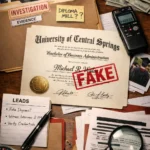
Recruitment in government education departments is expected to follow strict standards of transparency, merit, and authenticity. Physical Training Instructor recruitment, in particular, requires verified professional qualifications, as selected candidates are entrusted with student development and safety. However, a major recruitment scandal involving JS University exposed deep-rooted academic fraud when hundreds of candidates were found using forged degrees to secure government jobs.
The JS University PTI recruitment case became a landmark example of how fake educational credentials can infiltrate public recruitment systems, leading to criminal proceedings against a large number of applicants and raising serious questions about degree verification processes.
Background of the PTI Recruitment Drive
The Physical Training Instructor recruitment drive was conducted to fill teaching and training positions in government schools. Candidates were required to possess valid academic and professional qualifications, including Bachelor of Physical Education and other related degrees, from recognized institutions.
As part of the recruitment process, candidates submitted their academic credentials for verification. Initially, the recruitment proceeded as per standard procedures, but discrepancies soon began to surface during document scrutiny.
Emergence of Suspicion and Initial Scrutiny
Verification authorities noticed unusual patterns in several submitted certificates. A significant number of candidates had obtained BPEd and related degrees from the same institution within improbably short timeframes. Examination dates, enrollment details, and degree issue timelines raised red flags.
Further scrutiny revealed similarities in formatting, serial numbering, and academic records across multiple certificates, suggesting systematic forgery rather than isolated errors.
Role of JS University in the Case
JS University emerged as a common link among a large number of suspicious applications. The degrees presented claimed to be issued by the university, but inconsistencies were found in enrollment records, examination data, and course completion timelines.
Investigators found that many candidates had never attended classes, completed coursework, or appeared for examinations as required by academic norms. Despite this, they possessed degrees that appeared formally issued and officially stamped.
Police Investigation and Criminal Proceedings
Based on preliminary findings, law enforcement agencies initiated a criminal investigation. Detailed document verification was carried out in coordination with recruitment authorities and academic experts.
The investigation concluded that at least 167 candidates had submitted forged or fraudulently obtained degrees in the PTI recruitment process. These candidates were formally booked under various criminal provisions related to cheating, forgery, use of forged documents, and criminal conspiracy.
This marked one of the largest instances in India where job applicants themselves were prosecuted in bulk for using fake educational qualifications.
Nature of the Fake Degrees Used
The forged documents primarily involved Bachelor of Physical Education degrees, along with other allied qualifications. Common irregularities included:
Degrees issued without minimum course duration
Backdated certificates showing prior completion
Fabricated examination records
Non-existent enrollment numbers
Manipulated internal assessment marks
In many cases, candidates were unable to produce supporting documents such as hall tickets, attendance records, or fee receipts.
Impact on the Recruitment Process
The exposure of fake degrees led to immediate disruption of the PTI recruitment process. Selections were halted, appointment orders were reviewed, and verification protocols were strengthened.
Genuine candidates who had qualified through legitimate means were affected due to delays and re-evaluation of results. The incident undermined confidence in the recruitment system and highlighted vulnerabilities in document verification mechanisms.
Legal Consequences for Candidates
Candidates booked in the case faced serious legal consequences. Criminal charges can result in:
Permanent disqualification from government employment
Termination from service if already appointed
Criminal records affecting future job prospects
Legal expenses and prolonged court proceedings
The case demonstrated that using fake degrees is not merely an administrative violation but a criminal offense with long-term implications.
Broader Implications for Government Jobs
The JS University PTI recruitment case revealed how fake degrees can penetrate competitive government examinations. It underscored the urgent need for stricter background verification before final appointments.
Authorities recognized that reliance on physical documents alone is insufficient, especially when large-scale academic fraud networks exist.
Lessons for Job Aspirants
This case serves as a strong warning to job seekers:
Shortcuts in education can destroy careers
Degrees must be obtained only through recognized and compliant institutions
Using forged documents can lead to criminal prosecution
Even years later, fake qualifications can be detected
Aspiring candidates must understand that professional integrity begins with authentic education.
Institutional Accountability and Oversight
While candidates faced prosecution, the case also raised concerns about institutional accountability. The alleged role of academic authorities and intermediaries in facilitating fake degrees highlighted the need for continuous oversight of private universities.
The incident strengthened calls for tighter regulation, periodic audits, and centralized academic databases.
Strengthening Verification Mechanisms
Following the scandal, recruitment agencies increased emphasis on direct university verification, digitized record checks, and cross-department coordination. This shift aims to prevent similar frauds in future recruitment drives.
Verification is no longer viewed as a formality but as a critical safeguard for public service integrity.
Conclusion
The JS University PTI recruitment fake degree case stands as a significant example of how academic fraud can undermine public recruitment systems. The booking of 167 candidates sent a strong message that the misuse of forged degrees will attract serious legal consequences.