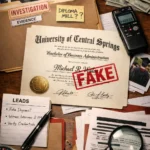
The credibility of higher education institutions plays a crucial role in shaping careers, public trust, and national development. When a university violates this trust by engaging in fraudulent practices, the consequences extend far beyond the institution itself. One such major incident in India involved JS University, located in Shikohabad, Uttar Pradesh. The university became the center of a serious fake degree and academic fraud scandal, leading to its dissolution by the state government and criminal action against its top officials. This case stands as a significant warning about the dangers of unregulated education practices and the importance of academic verification.
Background of JS University
JS University was established as a private university in Uttar Pradesh with approval to offer various undergraduate, postgraduate, and professional programs. It attracted students from different states, particularly those seeking distance learning, fast-track degrees, or flexible academic options. Over time, concerns began emerging regarding its academic practices, examination systems, and issuance of certificates.
Initially, these concerns surfaced through complaints from employers, academic verification agencies, and regulatory bodies that noticed irregularities in mark sheets and degrees issued by the university.
Nature of the Fake Degree Allegations
Investigations revealed that JS University was allegedly involved in issuing degrees and mark sheets without students completing the required academic process. The core allegations included:
Issuance of backdated degrees showing completion of programs in unrealistically short durations
Granting degrees without proper enrollment records
Manipulated examination data and fabricated internal assessments
Issuing mark sheets for courses that students never attended
Providing degrees without conducting examinations
These practices directly violated university regulations, academic standards, and national education norms.
Government Investigation and Findings
Following mounting complaints, the Uttar Pradesh government initiated a detailed inquiry into JS University’s operations. Committees were formed to examine admission records, examination systems, degree issuance processes, and financial transactions.
The investigation reportedly uncovered systematic manipulation of academic records. Large numbers of degrees were found to be issued in bulk, many with identical formats, suspicious timelines, and missing student documentation. Several degrees showed completion dates that contradicted statutory minimum course durations.
These findings confirmed that the issue was not isolated but institutional in nature.
Revocation of Recognition and Dissolution
Based on the investigation report, the Uttar Pradesh government took the unprecedented step of dissolving JS University. The recognition granted to the university was formally revoked, effectively stripping it of the authority to operate or award degrees.
This decision was taken to protect students, employers, and the education system from further damage. Once dissolved, all academic activities of the university were halted, and its governing body ceased to have legal standing.
Arrest of University Officials
In a major development, law enforcement agencies arrested key university officials, including the Chancellor and Registrar. These individuals were accused of playing central roles in orchestrating the fake degree operations.
Charges reportedly included cheating, forgery, criminal conspiracy, and falsification of records. The arrests marked a rare instance where top university leadership was held criminally accountable for academic fraud, sending a strong message to other institutions.
Impact on Students
One of the most tragic consequences of the scandal was its impact on genuine students. Thousands of students who had enrolled in good faith suddenly found their degrees under question or invalid.
Affected students faced multiple challenges:
Rejection of degrees by employers
Disqualification from government jobs and promotions
Problems with higher education admissions
Visa and immigration rejections
Psychological stress and financial loss
Many students were forced to seek revalidation, re-enrollment, or legal remedies to salvage their academic futures.
Effect on Employment and Professional Sectors
Degrees from JS University were reportedly used for employment in private companies, public sector recruitment, and professional promotions. Once the scam was exposed, employers initiated verification drives.
Several individuals faced job termination, suspension, or legal scrutiny for submitting JS University credentials. This caused ripple effects across sectors such as education, healthcare, engineering, and administration.
Legal Proceedings and Ongoing Cases
After the dissolution, multiple legal cases continued against university officials and intermediaries who facilitated the degree distribution. Investigations expanded to include agents, education consultants, and document processors who allegedly acted as middlemen.
Courts examined the validity of degrees issued, individual culpability, and the extent of financial gain made through the scam. Some cases also involved recovery of illegal earnings and seizure of records.
Role of Academic Verification
The JS University case highlighted the growing importance of academic verification and credential authentication. Employers, universities, and foreign institutions became more cautious, insisting on direct verification from universities or authorized agencies.
This case accelerated the demand for structured transcript services, official document verification, and proper attestation procedures to distinguish genuine qualifications from fraudulent ones.
Lessons for Students and Institutions
The JS University scandal offers critical lessons:
Students must verify university recognition and accreditation before enrollment
Shortcuts to degrees can lead to long-term career damage
Institutions must adhere strictly to regulatory frameworks
Regulatory bodies must maintain continuous oversight
Academic integrity must never be compromised for profit
Government and Regulatory Response
Following the incident, education authorities strengthened monitoring mechanisms for private universities. Increased audits, digital recordkeeping, and centralized verification systems were emphasized to prevent similar scams.
The case also reinforced the authority of the state to take decisive action against institutions violating academic laws.