Introduction
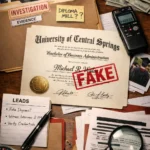
The arrest of a gang involved in producing and selling fake marksheets exposed a serious and often underestimated form of academic fraud. In this case, investigators apprehended two individuals who were manufacturing counterfeit marksheets that appeared to be issued by recognized educational institutions. Around sixty forged documents were seized during the operation, revealing how marksheet forgery alone has evolved into a profitable and organized criminal activity.
This case demonstrated that academic fraud is not limited to fake degrees alone. Even forged marksheets, when used strategically, can help individuals secure jobs, promotions, admissions, and other academic or professional advantages. The incident highlighted the alarming reality that academic credentials are increasingly being treated as tradable commodities rather than proof of genuine education.
Understanding the Role of Marksheets in Academic and Professional Life
Marksheets are foundational academic documents. They serve as official records of a student’s performance, progression, and eligibility. Employers, universities, government departments, and foreign authorities rely heavily on marksheets to verify qualifications.
In many cases, marksheets are required for:
Job eligibility verification
Admission into higher education programs
Promotion and internal assessment
Professional licensing and registration
Overseas employment and migration processes
Because marksheets are often the first document reviewed during screening, they have become a prime target for forgers.
Discovery of the Fake Marksheet Operation
The fake marksheet operation came to light when discrepancies were detected during routine verification processes. Authorities noticed irregularities such as mismatched roll numbers, inconsistent grading patterns, and formatting differences that did not align with official records.
Further investigation revealed that these marksheets did not originate from the claimed institutions. This led to targeted surveillance and eventual arrests of individuals involved in producing and selling the counterfeit documents.
Nature of the Counterfeit Documents Seized
The seized documents included fake marksheets that claimed to represent various levels of education, including secondary, undergraduate, and postgraduate programs. These marksheets were carefully designed to mimic official formats used by recognized institutions.
Common features of the forged marksheets included:
Fabricated roll numbers and registration details
Inflated or customized marks to meet eligibility criteria
False institution names and course titles
Printed seals and signatures resembling official records
Although visually convincing, these documents failed verification when matched with official academic databases.
Modus Operandi of the Fake Marksheet Gang
The arrested individuals operated a small but efficient setup focused exclusively on marksheet production. Their process involved:
Collecting personal and academic details from clients
Designing customized marksheets based on client requirements
Printing documents using high-quality equipment
Delivering forged marksheets within short timelines
Clients could request specific marks, subjects, or completion years, allowing them to tailor the document to suit job or academic needs.
Pricing and Commercialization of Academic Fraud
Investigations revealed that forged marksheets were being sold for significant amounts of money. Prices varied depending on:
In some cases, the cost of a single fake marksheet reached several lakhs of rupees. This pricing structure reflects the high demand for shortcuts in competitive job markets and highlights how academic fraud has become a lucrative business.
Use of Fake Marksheets for Jobs and Academic Advantages
The forged marksheets were reportedly used by candidates to:
Meet minimum educational qualifications for jobs
Secure admissions into higher education programs
Qualify for internal promotions
Improve eligibility for professional certifications
By presenting fake marksheets, individuals without the required academic background were able to bypass screening processes, undermining fairness and meritocracy.
Police Action and Arrests
Law enforcement agencies acted swiftly once the scale of the operation became clear. The arrest of the two individuals involved led to the seizure of:
Around sixty fake marksheets
Printing and scanning equipment
Digital templates and design files
Client records and transaction details
Criminal cases were registered under laws related to forgery, cheating, and criminal conspiracy.
Consequences for Individuals Using Fake Marksheets
Candidates found using forged marksheets faced serious repercussions, including:
Immediate disqualification from jobs or admissions
Termination from existing employment
Blacklisting by employers or institutions
Criminal investigation depending on intent
Long-term damage to professional credibility
Even individuals who claimed ignorance often faced irreversible career setbacks once fraud was detected.
Impact on Genuine Students and Graduates
The circulation of fake marksheets creates collateral damage for genuine students and graduates. Increased scrutiny results in:
Longer verification timelines
Additional documentation requirements
Suspicion toward authentic candidates
Delays in recruitment and admissions
Honest individuals are forced to repeatedly prove the legitimacy of their achievements due to the actions of fraudsters.
Systemic Weaknesses Enabling Marksheet Fraud
This case highlighted several weaknesses in the academic and employment verification ecosystem:
Overreliance on physical documents
Inconsistent verification standards across institutions
Lack of immediate access to centralized academic records
Limited awareness among candidates about verification risks
These gaps allow even small-scale forgery operations to thrive until detected through rigorous checks.
Why Marksheet Fraud Is Especially Dangerous
Unlike fake degrees, forged marksheets can sometimes be used alongside genuine certificates, making detection more difficult. A single fake semester or consolidated marksheet can be enough to alter eligibility outcomes.
This makes marksheet fraud particularly dangerous, as it can quietly infiltrate recruitment and academic systems without immediate suspicion.
Lessons from the Fake Marksheet Arrest Case
This case offers critical lessons:
Academic documents are always verified eventually
Marksheet-only fraud is treated as a serious criminal offense
Short-term gains lead to long-term career and legal consequences
Unauthorized agents cannot provide legitimate academic records
Authentic education is the only sustainable path
Need for Stronger Verification and Awareness
Authorities and institutions continue to emphasize:
Direct verification from issuing institutions
Digitization and centralized academic databases
Employer training to identify forged documents
Public awareness against purchasing academic credentials
Strict penalties to deter future fraud
Preventive action is essential to protect academic integrity.
Conclusion
The arrest of a gang producing and selling fake marksheets revealed how even a limited number of forged academic documents can cause widespread harm. The recovery of around sixty counterfeit marksheets demonstrated that marksheet fraud alone can support a profitable and damaging criminal operation.
This case stands as a warning that academic shortcuts carry severe consequences. Fake marksheets may offer temporary advantages, but they ultimately result in detection, legal action, and permanent damage to personal and professional credibility.