Introduction
Educational qualifications play a decisive role in shaping careers, determining employability, and establishing professional credibility. When forged degrees enter the system, they compromise not only individual institutions but also public trust in recruitment, education, and governance. In 2023, Delhi Police uncovered one of the largest fake degree rackets in recent years, arresting two individuals accused of issuing more than 2,000 fake degrees and certificates in the names of various Indian universities.
The case highlighted the alarming scale at which academic fraud can operate and exposed how organized networks exploit gaps in verification systems.
Background of the Fake Degree Operation
Delhi has long been a focal point for education, employment, and competitive examinations. This environment has also attracted document fraud networks that prey on aspirants seeking shortcuts to jobs, promotions, or overseas opportunities.
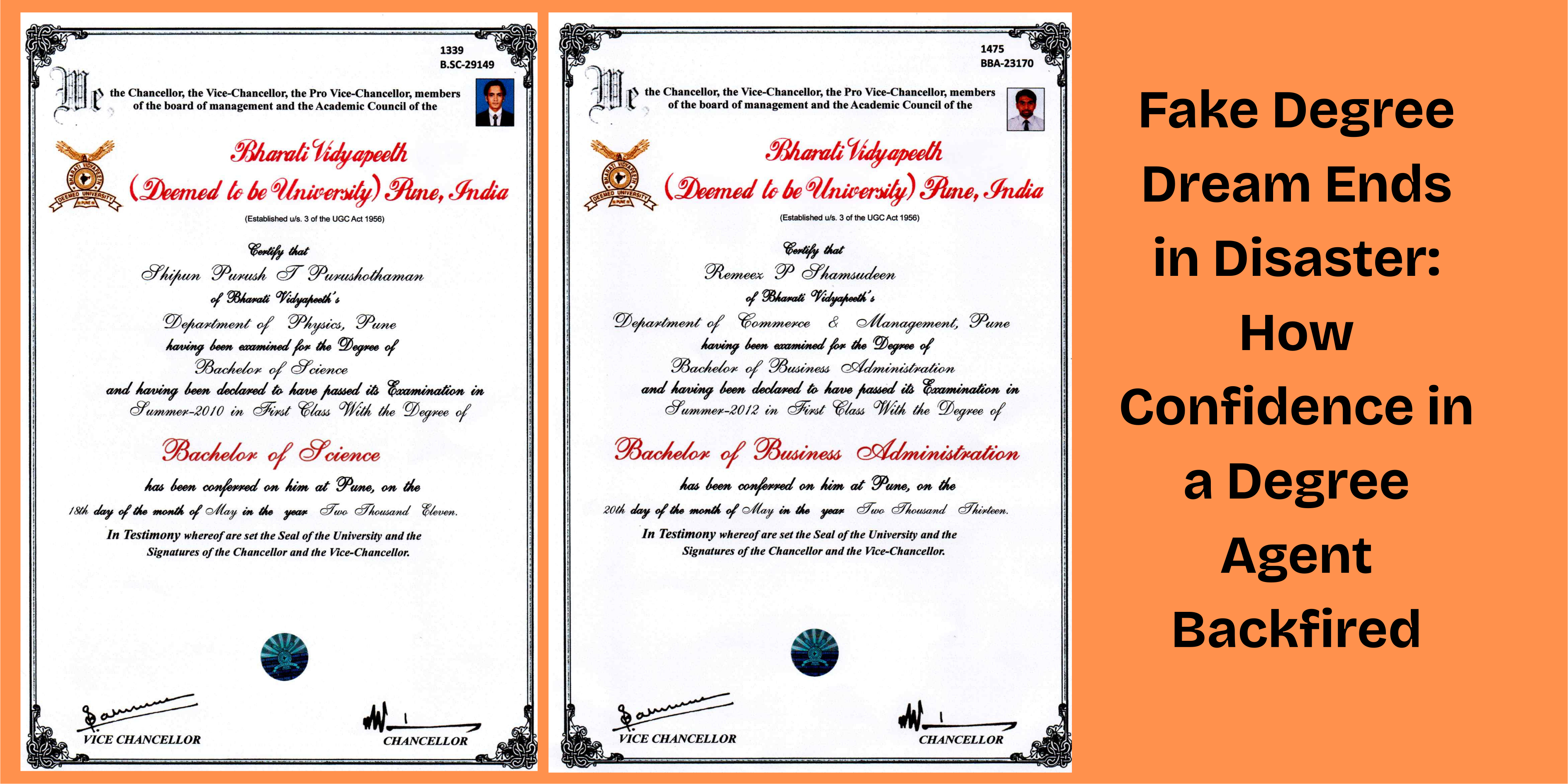
In this case, the accused allegedly operated a well-organized setup that produced forged academic certificates, including graduation, postgraduation, diplomas, and provisional certificates. These documents were presented as genuine university-issued credentials and sold to individuals across different states.
How the Racket Came to Light
The racket was uncovered following intelligence inputs and complaints received from verification agencies and employers. Discrepancies were noticed during background checks of candidates who had submitted academic credentials for employment and admission purposes.
Common red flags included mismatched enrollment numbers, incorrect course durations, fabricated examination details, and certificates that did not align with official university formats. These irregularities prompted Delhi Police to initiate a focused investigation.
Police Investigation and Surveillance
Delhi Police conducted extensive surveillance to trace the source of the forged documents. Investigators tracked communication channels, financial transactions, and intermediary agents involved in the distribution of fake degrees.
Undercover operations helped identify locations where certificates were being printed and finalized. Digital evidence, including computers and storage devices, played a crucial role in establishing the scale and structure of the operation.
Arrest of the Accused
In 2023, Delhi Police arrested two men believed to be the masterminds behind the fake degree racket. According to investigators, the accused were directly involved in:
Designing and printing forged certificates
Using fake seals and stamps of universities
Coordinating with agents and clients
Collecting payments for fraudulent documents
The arrests marked a significant breakthrough in dismantling the network.
Scale of the Forgery
During the investigation, police determined that the accused had issued more than 2,000 fake degrees and academic certificates over a period of time. These documents were falsely attributed to multiple Indian universities, making detection more challenging.
The sheer number of forged certificates indicated that the operation had been running for several years and had impacted a wide range of sectors.
Types of Fake Certificates Issued
The forged documents included:
Bachelor’s and Master’s degree certificates
Mark sheets and consolidated transcripts
Provisional certificates
Diploma and professional course certificates
These documents were designed to appear authentic, complete with fabricated signatures, seals, and serial numbers.
Use of Fake Degrees by Beneficiaries
Individuals who purchased these fake degrees reportedly used them for:
Securing government and private sector jobs
Applying for promotions and salary increments
Admission into higher education programs
Overseas employment and visa applications
Professional licensing and registrations
In some cases, beneficiaries had already gained employment before the fraud was detected.
Legal Charges and Consequences
The accused were booked under multiple criminal provisions related to cheating, forgery, use of forged documents, and criminal conspiracy. Investigators also began identifying buyers of the fake degrees, as using forged certificates is itself a criminal offense.
Those found using fake credentials face serious consequences, including job termination, blacklisting from government employment, and criminal prosecution.
Impact on Employers and Institutions
The exposure of the racket forced employers, universities, and recruitment agencies to re-examine their verification practices. Organizations initiated internal audits to identify candidates who may have submitted fraudulent qualifications.
The case caused delays in recruitment processes and increased scrutiny of genuine candidates, highlighting the widespread damage caused by academic fraud.
Role of Intermediaries and Agents
Investigations revealed that agents played a key role in expanding the reach of the racket. These intermediaries approached job seekers and students, promising guaranteed degrees without academic effort.
By acting as a bridge between fraudsters and buyers, agents helped normalize the use of fake degrees and increased demand for such illegal services.
Challenges in Academic Verification
The case exposed vulnerabilities in academic verification systems, including reliance on physical documents, delayed confirmation from universities, and lack of centralized databases.
Fraudsters exploited these weaknesses to circulate forged certificates with minimal risk of immediate detection.
Strengthening Safeguards Against Academic Fraud
Following the arrests, authorities emphasized the importance of robust verification mechanisms. Measures such as digital academic records, centralized verification platforms, and direct university confirmation were highlighted as essential steps to prevent similar scams.
Employers and institutions were encouraged to treat credential verification as a critical component of recruitment and admissions.
Lessons for Students and Job Seekers
The 2023 Delhi fake degree case serves as a clear warning:
Using forged academic documents is a criminal offense
Short-term gains can lead to long-term legal consequences
Fake degrees can be detected even years later
Authentic education is the only secure foundation for a career
Awareness and due diligence are vital when pursuing academic or professional qualifications.
Broader Implications for the Education System
The case reinforced the need for stricter regulation, continuous monitoring of document authenticity, and accountability at every level of the education ecosystem.
It also demonstrated the growing seriousness with which law enforcement agencies are addressing academic fraud.
Conclusion
The Delhi Police arrests in the massive fake degree case of 2023 exposed a deeply organized network that issued more than 2,000 forged academic certificates. By dismantling this operation, authorities sent a strong message that academic fraud will not be tolerated.