Recent investigations in Uttar Pradesh have uncovered a widespread fake degree racket involving bogus entities posing as education councils, boards, and institutes. These unrecognised bodies were found offering degree and diploma programs that have no legal or academic validity. By presenting themselves as official or semi-official authorities, these entities misled thousands of students and parents, putting careers, finances, and futures at serious risk. The revelations have prompted police and education officials to issue strong warnings and intensify action against such fraudulent operations.
This case highlights how academic fraud has evolved beyond individual fake certificates into organised deception targeting students at the admission stage itself.
How the Bogus Education Bodies Operated
The fake councils and institutes adopted names that closely resembled those of recognised national or state-level education authorities. They used official-sounding titles, professional logos, and formal language to create an illusion of legitimacy. Websites, printed brochures, and office setups were designed to convince students and parents that the institutions were authorised to offer degree programs.
Admissions were promoted as flexible and fast, often claiming that courses could be completed in a short time without strict attendance or examination requirements. This approach appealed to working professionals, school dropouts, and students who had failed to secure admission in recognised institutions.
Types of Fake Degrees and Programs Offered
The unrecognised bodies offered a wide range of academic programs, including undergraduate, postgraduate, technical, and vocational courses. Degrees were marketed in fields such as arts, commerce, management, education, engineering, and health-related disciplines.
Certificates issued by these entities carried seals, serial numbers, and signatures that appeared authentic but had no backing under law. In many cases, the issuing bodies had no authority to conduct examinations, award degrees, or maintain academic records. Students who completed these programs received certificates that were invalid for employment, higher studies, or professional registration.
Exploitation of Students and Families
Students and parents were often lured through advertisements promising guaranteed degrees, easy eligibility, and low fees compared to recognised universities. Some entities claimed special government approval or international recognition, further misleading applicants.
Many victims only discovered the fraud when their degrees were rejected during job applications, government recruitment, or verification for higher education. By then, years of time and significant financial resources had already been lost.
Role of Middlemen and Admission Agents
Middlemen played a critical role in expanding the reach of fake education bodies. Agents approached students in rural and semi-urban areas, offering admissions and handling paperwork in exchange for commissions. These intermediaries reassured families about degree validity and discouraged independent verification.
Such agents often vanished once admissions were completed, leaving students with no recourse when problems surfaced later.
Police and Education Department Action
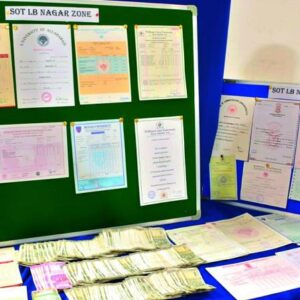
Following complaints and media reports, police and education authorities in Uttar Pradesh initiated investigations into several such bogus councils and institutes. Raids led to the seizure of forged certificates, seals, admission records, and promotional materials.
Officials issued public warnings advising students and parents to verify the recognition status of institutions before enrolling. Education departments also reiterated that degrees issued by unrecognised bodies have no legal standing and cannot be regularised later.
Legal Consequences for Fraudsters and Users
Operators of fake education bodies face criminal charges including cheating, forgery, impersonation, and criminal conspiracy. Authorities are also examining financial transactions to track the profits generated through these illegal admissions.
Students who knowingly used fake degrees for employment or other benefits may also face legal consequences. However, officials have acknowledged that many victims were genuinely misled and may be treated as complainants rather than accused, depending on circumstances.
Impact on the Education System
The proliferation of fake education bodies undermines trust in the education system. Genuine institutions face increased skepticism, and employers become more cautious during recruitment. This results in longer verification processes and additional scrutiny, affecting honest graduates.
Such scams also distort educational aspirations, encouraging shortcuts rather than genuine learning and skill development.
Need for Awareness and Preventive Measures
The UP investigations underscore the urgent need for awareness among students and parents. Verifying institutional recognition through official channels, avoiding agents promising guaranteed degrees, and being cautious of programs offering unrealistically quick completion are essential safeguards.
Authorities have also called for stronger regulatory coordination and the creation of easily accessible public databases listing recognised institutions and programs.
Lessons for Students and Parents
This case serves as a strong reminder that education is a long-term investment that requires careful decision-making. Degrees obtained from unrecognised bodies not only waste time and money but can also cause lasting harm to careers and credibility.
Trust should be placed in transparent institutions with verifiable approvals, even if the path is more demanding.