Introduction
The Hyderabad Commissioner’s Task Force recently uncovered a fake educational certificate racket that once again exposed the fragile points in India’s academic and employment verification systems. In a targeted operation, two individuals were arrested for their involvement in issuing forged academic documents to job seekers and students. The case has drawn attention to the increasing misuse of educational credentials and the organized nature of certificate fraud operating within urban centers.
How the Racket Came to Light
The investigation began after authorities received specific intelligence inputs regarding the circulation of suspicious academic certificates in Hyderabad. Employers and verification agencies had flagged inconsistencies in certain degree certificates and marksheets submitted during recruitment and background verification processes. These discrepancies prompted a deeper inquiry by the Task Force, which traced the origin of the documents to a small but well-coordinated forgery operation.
Surveillance and follow-up inquiries led officers to identify two individuals who were acting as intermediaries and document producers. The suspects were reportedly offering educational certificates claiming affiliation with reputed universities and boards, despite having no official authorization or institutional link.
Nature of the Forged Certificates
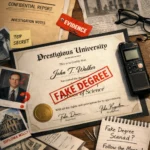
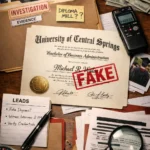
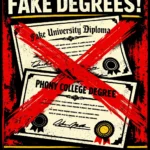
The fake certificates seized during the operation included degree certificates, provisional certificates, and academic marksheets. These documents were designed to closely resemble original university-issued records, complete with fabricated registration numbers, course details, and seals. In some cases, forged signatures of university officials were also used to enhance the appearance of authenticity.
Investigators found that the accused maintained digital templates of certificates from multiple universities. By customizing personal details, they were able to produce forged documents quickly based on client requirements. This flexibility allowed them to cater to a wide range of customers seeking credentials for employment, promotions, or admissions.
Targeting Job Seekers and Vulnerable Individuals
The racket primarily targeted job seekers who lacked the required educational qualifications or had incomplete academic records. By promising quick and hassle-free certificates, the accused exploited individuals facing pressure to secure employment in competitive sectors. Clients were charged substantial amounts depending on the type of certificate and the level of qualification requested.
Such rackets thrive on desperation and lack of awareness. Many clients underestimated the risks involved, believing that forged certificates would go undetected. However, increased scrutiny by employers and the use of digital verification tools have made it increasingly difficult for such fraud to remain hidden.
Organized Operation and Local Network
Although only two arrests were made initially, investigators believe the racket may have had wider connections. The accused were suspected of sourcing certificate formats and seal designs through informal networks and sharing data with other document forgers. Payments were often collected in cash or routed through informal channels to avoid detection.
The operation demonstrated how even small groups can cause significant damage when they have access to technology and insider knowledge of academic documentation formats. Authorities are continuing to analyze seized devices to identify additional collaborators and clients who benefited from the forged documents.
Legal Action and Criminal Charges
The arrested individuals are expected to face serious criminal charges, including forgery, cheating, criminal conspiracy, and the use of forged documents as genuine. Law enforcement officials have emphasized that both creators and users of fake certificates are liable under the law. Those who knowingly submit forged documents for employment or admission can face prosecution, job termination, and permanent damage to their professional reputation.
The case also serves as a warning to intermediaries and agents who facilitate academic fraud. Even small-scale operations are now under closer surveillance, and enforcement agencies are increasingly proactive in tracking and dismantling such networks.
Impact on Employers and Educational Institutions
Fake certificate rackets undermine trust in academic qualifications and create challenges for employers. Organizations are forced to invest more resources in verification processes, delaying recruitment and increasing operational costs. Genuine candidates often face repeated checks and documentation requests due to the growing prevalence of forged credentials.
Educational institutions also suffer reputational harm when their names are misused in fake certificates. Universities must continuously respond to verification requests and clarify the authenticity of documents, diverting time and resources from academic activities.
Need for Stronger Verification and Awareness
The Hyderabad fake certificate case highlights the urgent need for stronger academic verification systems. Employers should insist on direct verification from issuing institutions rather than relying solely on physical documents. Universities and boards must strengthen digital recordkeeping, secure access to databases, and provide clear verification channels.
For students and job seekers, awareness is crucial. Using forged certificates may appear to offer a shortcut, but the long-term consequences far outweigh any short-term benefit. Legal action, career setbacks, and loss of credibility are risks that can permanently affect an individual’s future.
Conclusion
The bust of the fake educational certificate racket by the Hyderabad Commissioner’s Task Force underscores the growing challenge of academic fraud in India. While the arrest of two individuals marks an important step, the case also reveals the ease with which forged documents can be produced and circulated. Combating this problem requires sustained law enforcement efforts, institutional accountability, and public awareness to preserve the value of genuine education and protect the integrity of employment systems.