Introduction
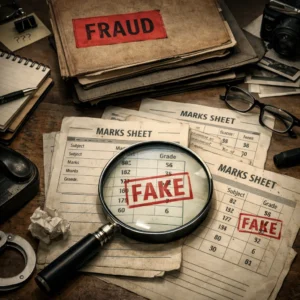
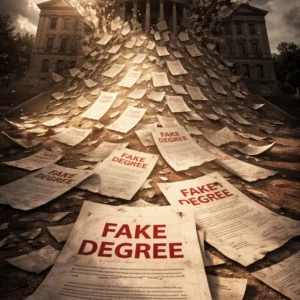
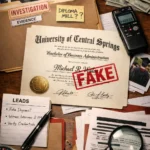
The Kerala Police recently uncovered a large-scale fake certificate racket that has once again highlighted the growing menace of academic fraud in India. In a coordinated operation, law enforcement authorities dismantled an interstate gang involved in the manufacturing and distribution of forged university certificates. More than one hundred fake academic documents were seized along with printing machinery, forged seals, and digital templates used to imitate official university records. The case has raised serious concerns about the misuse of higher education credentials and the vulnerability of job markets and institutions to such fraud.
Background of the Fake Certificate Racket
The investigation began after suspicious educational documents surfaced during routine employment verification and background checks. Several certificates claiming affiliation with reputed Indian universities showed irregularities in format, seal placement, and registration numbers. This prompted Kerala Police to launch a deeper probe, which soon revealed the existence of a well-organized syndicate operating across state borders.
The gang reportedly targeted job seekers who lacked formal educational qualifications or those who failed to complete their degrees. By exploiting desperation and lack of awareness, the accused offered forged degrees, marksheets, and provisional certificates in exchange for large sums of money. These documents were presented as genuine university-issued credentials, making it difficult for employers to detect fraud at first glance.
Scale and Modus Operandi of the Gang
The seized materials indicate that the operation was not a small-time forgery unit but a professionally run illegal enterprise. The gang possessed advanced printing equipment, high-quality paper, and forged seals resembling those used by universities and examination boards. Digital files containing templates of certificates from multiple universities were also reportedly recovered.
The syndicate followed a systematic process. Once a client placed an order, personal details such as name, course, year of passing, and enrollment number were collected. These details were then inserted into pre-designed templates. The certificates were printed, stamped with forged seals, and sometimes even artificially aged to appear authentic. In certain cases, the gang also provided fake transcripts and consolidated marksheets to strengthen the credibility of the forged degree.
Interstate Network and Organized Crime Angle
One of the most alarming aspects of the case is the interstate nature of the gang. Members were operating from different states, sourcing raw materials from one location, printing certificates in another, and distributing them through agents in multiple cities. This structure helped them evade detection and continue operations for an extended period.
The investigation suggests links to previous fake certificate cases across southern and northern India. Such networks often share templates, seal designs, and client databases, indicating the presence of a broader underground ecosystem dedicated to academic forgery.
Impact on Employment and Public Trust
Fake certificates pose a serious threat to the integrity of employment systems. Individuals using forged degrees can secure jobs in sectors that require specialized knowledge, including healthcare, education, engineering, and public services. This not only undermines qualified candidates but also puts public safety at risk when unqualified individuals occupy critical roles.
Beyond employment, academic fraud damages the credibility of genuine universities and degrees. Employers and international credential evaluation agencies become increasingly skeptical, leading to stricter verification processes. Honest graduates often suffer delays, additional scrutiny, and repeated documentation requirements because of the actions of fraudsters.
Legal Consequences and Ongoing Investigation
Those arrested in the Kerala fake certificate case are expected to face multiple criminal charges, including forgery, cheating, criminal conspiracy, and impersonation. Police are also examining financial transactions to identify money trails and additional beneficiaries. Authorities believe that more arrests are likely as the investigation progresses and client lists are analyzed.
The case has also prompted police to collaborate with universities, employers, and verification agencies to cross-check suspected fake credentials. This cooperative approach is seen as essential to dismantle similar rackets operating covertly across the country.
Growing Need for Academic Document Verification
Incidents like this highlight the urgent need for robust academic document verification mechanisms. Universities and boards must strengthen record digitization, secure databases, and verification portals. Employers, recruitment agencies, and foreign credential evaluators should avoid relying solely on physical documents and insist on direct verification from issuing institutions.
For students and job seekers, the case serves as a strong warning against using forged credentials. While fake certificates may appear to offer a shortcut, the legal, professional, and reputational consequences can be devastating and permanent.
Conclusion
The Kerala Police bust of the fake certificate gang is a significant step in curbing academic fraud, but it also exposes the scale at which such illegal activities continue to thrive. As long as demand exists for shortcuts to education and employment, such rackets will attempt to exploit the system. Strong law enforcement action, combined with awareness, strict verification practices, and institutional accountability, is the only way to protect the value of genuine education and restore trust in academic credentials.