The deportation of a Telangana student from the United States and the arrest of the head of a visa consultancy firm in India have brought renewed attention to the growing problem of academic document fraud linked to international migration. This case highlights how forged educational records are being used as tools to manipulate visa systems, and how organized networks exploit the aspirations of students seeking overseas education and employment.
The incident underscores the serious consequences of falsifying academic credentials, not only for individuals but also for the broader reputation of a country’s education system.
Background of the Case
The student, originating from Telangana, had traveled to the United States on a visa that required the submission of verified academic documents. Like many international applicants, he relied on academic qualifications to demonstrate eligibility for study or employment.
During post-entry verification and compliance checks, authorities discovered discrepancies in the academic records submitted with the visa application. These discrepancies prompted a deeper investigation, which ultimately revealed that the documents were forged.
As a result, the student was detained for immigration violations and deported back to India. Simultaneously, law enforcement agencies in India moved against the consultancy firm that had facilitated the submission of the forged documents.
Role of the Visa Consultancy Firm
Investigations revealed that the consultancy firm played a central role in preparing and submitting the fraudulent application. The firm’s head was arrested on charges related to forgery, cheating, and conspiracy.
According to investigators, the consultancy allegedly offered end-to-end services, including document preparation, application filing, and interview coaching. As part of this process, forged academic records were created or procured to meet visa eligibility criteria.
The involvement of a professional consultancy highlights how some agencies operate beyond ethical boundaries, transforming from advisory services into active participants in fraud.
Nature of the Forged Academic Documents
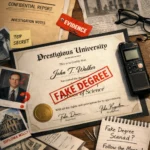
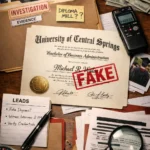
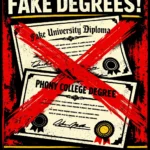
The forged documents included academic transcripts, degree certificates, and supporting records that were designed to appear legitimate. These documents reportedly contained fabricated enrollment details, altered grades, and false institutional affiliations.
Such documents are often created using advanced digital tools, making them visually similar to genuine certificates. However, discrepancies become evident when authorities conduct direct verification with issuing institutions or access centralized academic databases.
This case demonstrates that even sophisticated forgeries are vulnerable to thorough verification processes.
Detection by US Immigration Authorities
US immigration authorities employ multi-layered verification systems that include document scrutiny, database checks, and institutional confirmations. In this case, the forged documents were flagged during compliance checks, which can occur at various stages, including after entry into the country.
Once inconsistencies were identified, the student’s immigration status was reviewed, leading to the conclusion that the visa had been obtained through misrepresentation. This resulted in immediate deportation proceedings.
The case illustrates that visa approval does not guarantee long-term security if underlying documentation is fraudulent.
Legal Consequences for the Student
The deported student now faces serious long-term consequences. Deportation from the United States often results in bans on re-entry, future visa ineligibility, and permanent records of immigration fraud.
These consequences can affect not only attempts to return to the United States but also applications to other countries that share immigration data. The stigma associated with deportation further complicates future educational and employment prospects.
The case serves as a reminder that even if individuals claim ignorance, responsibility ultimately lies with the applicant.
Arrest and Charges Against the Consultancy Head
The arrest of the consultancy firm’s head marks an important step in addressing the supply side of visa fraud. Authorities have charged the accused with multiple offenses, including document forgery, cheating, and criminal conspiracy.
Investigators are examining the firm’s records to identify other clients who may have benefited from similar practices. This could potentially uncover a larger network of fraud affecting multiple applicants.
The arrest sends a clear signal that facilitators of academic and visa fraud will be held accountable.
Cross-Border Nature of Academic Fraud
This case highlights the cross-border nature of modern academic fraud. Documents forged in one country are used to exploit immigration systems in another, creating challenges for enforcement and detection.
International cooperation between immigration authorities, education regulators, and law enforcement agencies is increasingly essential to combat such fraud. Information sharing and coordinated investigations play a critical role in identifying patterns and dismantling networks.
The Telangana case demonstrates how local actions can have international repercussions.
Impact on Genuine Students and Consultants
Incidents like this have a ripple effect on genuine students and ethical consultants. Increased scrutiny and stricter verification measures can lead to longer processing times and additional documentation requirements for honest applicants.
Reputable consultancy firms may also face reputational challenges as public trust in the industry erodes. This underscores the need for stronger regulation and accreditation of education and visa consultants.
Lessons for Aspiring International Students
The case offers important lessons for students planning to study or work abroad. Academic honesty is not optional but fundamental to long-term success. Any attempt to manipulate or falsify records carries significant risks.
Students must verify the credentials of consultants, insist on transparency, and ensure that all submitted documents are genuine. Blind trust in agents can lead to irreversible consequences.
Choosing legitimate educational pathways may require more effort, but it protects individuals from legal and professional ruin.
Strengthening Systems Against Academic and Visa Fraud
To prevent similar cases, authorities must continue strengthening verification systems, regulating consultancy firms, and educating the public about the dangers of fake documents.
Digital verification platforms, centralized academic databases, and stricter penalties for facilitators can act as deterrents. Public awareness campaigns can help aspirants recognize red flags and avoid falling into fraudulent schemes.
Conclusion
The deportation of a Telangana student and the arrest of a consultancy firm head in a US visa fraud case reveal the deep interconnection between academic integrity and international mobility. Forged educational documents may provide short-term access, but they inevitably lead to long-term consequences.
This case stands as a warning to students, consultants, and institutions alike. In a world of increasing transparency and data sharing, honesty and compliance remain the only sustainable paths to global opportunity.