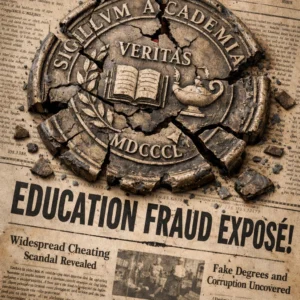
The arrest of a key mastermind behind a massive fake educational certificate racket at Mumbai International Airport has once again exposed the dark underbelly of academic fraud networks operating across India. The case highlights how counterfeit degrees and mark sheets have become tools for illegal employment, immigration fraud, and professional misrepresentation, not only within the country but across international borders. The arrest is significant because it reveals the scale, longevity, and sophistication of these operations, which often function undetected for years.
This incident underscores a growing challenge for governments, educational regulators, and employers worldwide, as forged academic credentials continue to undermine trust in formal education systems.
The Arrest at Mumbai International Airport
Law enforcement agencies intercepted the accused at Mumbai International Airport based on intelligence inputs gathered during an ongoing investigation into fake certificate syndicates. The individual, described by investigators as a central operator rather than a low-level agent, was attempting to travel abroad when he was detained.
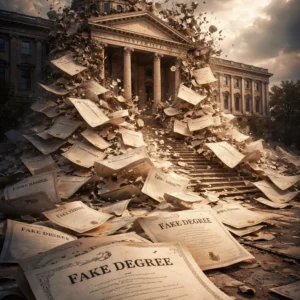
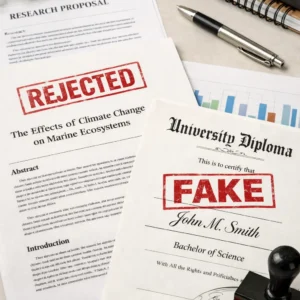
Upon questioning and subsequent searches, authorities recovered a large cache of forged documents, including degrees, provisional certificates, mark sheets, and university seals. These documents purported to originate from universities across multiple Indian states, indicating that the racket was not confined to a single region or institution.
The arrest at an international transit point highlights the transnational dimension of academic fraud, where forged credentials are often used to secure overseas jobs, visas, and residency opportunities.
Anatomy of the Fake Certificate Racket
Investigations revealed that the accused had been operating the racket for many years, building an extensive client base that included job seekers, visa applicants, and individuals seeking academic shortcuts. The operation functioned as a parallel underground system that mimicked legitimate university processes.
The racket reportedly offered a range of services, including:
Fake undergraduate and postgraduate degrees
Counterfeit mark sheets with customized grades
Backdated certificates aligned with eligibility requirements
Fabricated migration and transfer documents
Forged university verification letters
Clients could choose universities, courses, years of passing, and even grade distributions. The sophistication of these documents often made them difficult to distinguish from genuine certificates during superficial verification checks.
Role of Intermediaries and Agents
One of the most alarming aspects of the case is the role played by intermediaries and agents. The mastermind rarely dealt directly with clients. Instead, a network of brokers operated in different cities, sourcing customers and relaying requirements.
These agents targeted individuals who were desperate for employment, struggling with academic failures, or eager to migrate abroad. Many clients were reportedly aware that the documents were fake, while others claimed they were misled into believing they were obtaining legitimate degree equivalency or alternative certification.
The layered structure of the racket made it resilient, allowing the central operator to remain insulated from direct exposure for years.
Use of Fake Certificates for Overseas Employment and Immigration
A significant portion of the fake certificates produced by the racket were allegedly used for overseas purposes. Many countries require authenticated academic qualifications for work visas, student visas, and professional licensing. Forged degrees can enable unqualified individuals to bypass these safeguards.
Investigators believe that fake certificates from Indian universities were submitted to foreign employers, immigration authorities, and credential evaluation agencies. In some cases, these documents were used to secure jobs in sensitive sectors such as healthcare, education, and engineering.
Such misuse not only damages India’s educational reputation globally but also poses risks to public safety and professional standards in destination countries.
Discovery of Multi-State University Forgery
During the investigation, police recovered fake certificates attributed to universities across multiple states. This included central, state, private, and distance education institutions. The presence of documents from diverse regions demonstrates how fraudsters exploit the sheer size and complexity of India’s higher education system.
The accused reportedly maintained digital templates, printing equipment, and forged seals that allowed rapid customization. The documents were often paired with fabricated enrollment numbers and examination details to withstand basic scrutiny.
This multi-state dimension complicates enforcement efforts, requiring coordination among different state authorities and educational regulators.
Longevity of the Operation and Regulatory Gaps
One of the most troubling revelations is the length of time the racket remained operational. Investigators believe the accused had been active for many years, adapting techniques to stay ahead of detection.
The longevity of such operations exposes serious gaps in verification systems. Many employers and agencies rely on physical certificates or basic document checks rather than direct verification with issuing universities. Delays, manual processes, and lack of centralized databases further enable fraudsters.
This case demonstrates how academic fraud thrives in environments where oversight is fragmented and verification mechanisms are slow or inconsistent.
Legal Charges and Criminal Proceedings
Following the arrest, the accused faces multiple serious charges, including forgery, cheating, criminal conspiracy, identity fraud, and use of counterfeit official seals. Authorities are also probing financial transactions linked to the racket, including payments received through cash, digital wallets, and proxy accounts.
Investigators are now working to identify clients who benefited from the fake certificates. Those found to have knowingly used forged documents may face criminal action, job termination, and disqualification from future employment or immigration processes.
The case is expected to expand as more arrests are made and additional links are uncovered.
Impact on Genuine Students and Institutions
While the focus remains on criminal accountability, the broader impact of such rackets falls heavily on genuine students and legitimate educational institutions. Every exposed fraud case increases suspicion around authentic degrees, leading to stricter scrutiny and delays for honest candidates.
Universities whose names are misused suffer reputational damage, even when they are victims rather than participants in the fraud. This erosion of trust affects graduates seeking jobs or admissions abroad, who may face additional verification hurdles due to the actions of fraudsters.
A Growing Threat to Academic Integrity
The arrest at Mumbai Airport is not an isolated incident but part of a larger pattern of academic fraud cases emerging across India. The demand for degrees as gateways to employment and migration has created fertile ground for illegal operators who monetize desperation and ambition.
Fake certificate rackets represent a serious threat to academic integrity, workforce quality, and national credibility. They undermine merit-based systems and disadvantage those who invest time, effort, and resources into genuine education.
The Need for Stronger Verification and Enforcement
This case reinforces the urgent need for systemic reforms. Centralized digital verification systems, faster inter-university data sharing, and mandatory direct verification for employment and immigration processes could significantly reduce the scope for fraud.
Equally important is public awareness. Individuals must understand the severe legal and personal consequences of using fake educational credentials. Short-term gains achieved through fraud often result in long-term damage to careers and reputations.
Conclusion
The arrest of a fake educational certificate racket mastermind at Mumbai International Airport serves as a stark reminder of how deeply organized academic fraud has penetrated modern society. The case exposes not only criminal ingenuity but also institutional vulnerabilities that must be addressed urgently.