Introduction
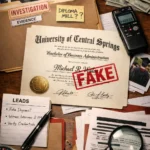
The recent uncovering of a large fake degree and marksheet racket by the Uttar Pradesh Special Task Force has brought renewed attention to the growing menace of academic fraud in India. This case is not limited to one institution or one region. Instead, it exposes a well-organized operation that manufactured and distributed counterfeit academic documents claiming affiliation with multiple universities across the country.
The scale of the racket, the variety of forged documents involved, and the number of individuals allegedly benefiting from fake qualifications reveal how deeply such fraud has penetrated employment and education systems.
How the Racket Came to Light
The investigation reportedly began after irregularities were noticed during routine verification of academic credentials submitted for employment and admissions. Several certificates raised red flags due to inconsistencies in formatting, serial numbers, academic timelines, and institutional records.
As verification intensified, authorities discovered that the suspicious documents were not isolated cases. Instead, they formed part of a broader pattern, prompting the UP Special Task Force to initiate a detailed probe that eventually exposed a large counterfeit document network.
Scale and Reach of the Operation
One of the most alarming aspects of the racket was its nationwide scope. The forged documents claimed to originate from multiple universities across different states, making detection more difficult and spreading the fraud across various sectors.
The operation reportedly catered to:
Job seekers in private and semi-government sectors
Candidates applying for contractual and permanent roles
Individuals seeking academic admissions or lateral entry
Applicants aiming to meet minimum eligibility criteria
This wide reach transformed academic qualifications into purchasable commodities rather than earned credentials.
Types of Forged Academic Documents Recovered
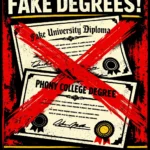
During raids and arrests, authorities recovered a large number of counterfeit documents, including:
Undergraduate degree certificates
Postgraduate degree certificates
Semester-wise and consolidated marksheets
Provisional certificates
Enrollment and course completion records
These documents were designed to closely resemble genuine university-issued records, often including seals, signatures, logos, and official formatting.
Manufacturing Process Behind Fake Degrees
Investigators found evidence suggesting the use of professional printing equipment and high-quality materials. Forgery units reportedly used:
Advanced printers and scanners
Pre-designed academic templates
Forged seals and stamps
Digitally replicated signatures
Serial numbering systems to avoid duplication
Such sophistication allowed fake documents to pass initial scrutiny, especially in cases where verification processes were weak or delayed.
Role of Middlemen and Document Brokers
The racket reportedly relied heavily on intermediaries who acted as brokers between document manufacturers and end users. These middlemen:
Approached job seekers and students
Promised guaranteed degrees without study
Offered documents customized to job requirements
Charged varying fees based on degree level and urgency
In many cases, candidates were falsely assured that the documents were legitimate or officially sourced.
Employment Secured Using Forged Credentials
Authorities suspect that several individuals used these fake degrees and marksheets to secure employment. Positions obtained through fraudulent credentials may include:
Administrative and clerical roles
Technical positions
Teaching and academic support roles
Corporate and contractual employment
Once employed, such individuals often remained undetected until audits, background checks, or whistleblower complaints initiated re-verification.
Impact on Genuine Job Seekers and Students
Academic fraud does not only benefit offenders. It also harms honest candidates who:
Lose opportunities to unqualified individuals
Face longer and stricter verification processes
Experience delays in recruitment and admissions
Suffer reputational harm due to widespread suspicion
This erosion of trust makes merit-based systems harder to sustain.
Legal Consequences and Criminal Liability
Individuals involved in manufacturing, selling, or knowingly using fake academic documents may face:
Criminal charges for forgery and cheating
Arrest and prosecution
Job termination and blacklisting
Disqualification from future employment
Recovery of benefits obtained through fraud
Even candidates who claim ignorance may face consequences if negligence is proven.
Role of the UP Special Task Force
The involvement of the UP STF reflects the seriousness of the offense. Their role includes:
Identifying the full network behind the racket
Tracing financial transactions
Coordinating with universities and institutions
Verifying academic records
Initiating legal action against all involved parties
The investigation is expected to expand as more forged documents are identified.
Weaknesses in Academic Verification Systems
This case has exposed several systemic weaknesses, including:
Overdependence on physical documents
Fragmented record-keeping across institutions
Limited real-time verification mechanisms
Lack of centralized academic databases
Inconsistent background checks by employers
These gaps allow fraud networks to operate for extended periods before detection.
Academic Integrity and National Credibility
When fake degrees circulate widely, the credibility of the entire education system is affected. This has consequences for:
Domestic employment markets
Professional licensing bodies
International recognition of Indian qualifications
Trust in educational institutions
Restoring confidence requires coordinated action across regulatory, academic, and employment sectors.
The Illusion of Easy Qualifications
Fake degree rackets thrive on the belief that education can be bypassed through documentation. However, such shortcuts often result in:
Genuine education, though demanding, remains the only sustainable path.
Employer Responsibility in Preventing Academic Fraud
Employers play a critical role in stopping the spread of fake credentials by:
Conducting direct institutional verification
Scrutinizing academic timelines
Implementing standardized background checks
Rejecting unverifiable or inconsistent documents
Strong verification practices protect organizations and promote fairness.
Broader Social and Economic Impact
Academic fraud undermines social mobility and meritocracy. When degrees are bought rather than earned:
These long-term effects harm both individuals and institutions.
Conclusion
The large fake degree and marksheet racket uncovered by the Uttar Pradesh Special Task Force serves as a powerful reminder of the dangers posed by organized academic fraud. By exposing how counterfeit qualifications from multiple universities were manufactured and distributed on a national scale, the case highlights the urgent need for stronger verification systems and stricter enforcement.
Academic qualifications are meant to represent learning, effort, and competence. When they are reduced to printed documents sold for profit, the consequences ripple across employment, education, and society as a whole. This case stands as a warning that forged credentials may offer temporary gains, but they inevitably lead to exposure, accountability, and lasting consequences.