Introduction
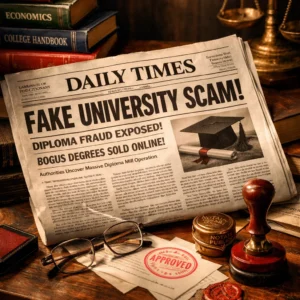
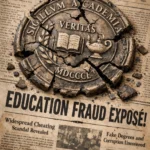
The exposure of the Periyar University fake degree racket in Tamil Nadu revealed a deeply organized system of academic forgery that targeted job aspirants across multiple sectors. Fake degree certificates bearing the name of Periyar University were circulated among individuals seeking employment, promotions, and professional recognition. The case gained serious attention after police seized forged university seals, high-end printers, and document templates used to replicate official university certificates.
This incident highlighted how academic fraud networks exploit the trust placed in recognized public universities and how forged educational credentials can infiltrate employment systems if verification mechanisms are weak or bypassed.
About Periyar University
Periyar University is a state public university located in Tamil Nadu, offering undergraduate, postgraduate, and doctoral programs through its departments and affiliated colleges. Degrees issued by the university are widely accepted for government jobs, private employment, higher education, and professional registrations.
Because of its recognition and credibility, the university’s name carries significant weight in recruitment and verification processes. This credibility also made it a target for criminals producing counterfeit academic documents.
Discovery of the Fake Degree Racket
The fake degree racket came to light after irregularities were detected during employment verification processes. Employers and verification authorities noticed mismatches in enrollment numbers, issue dates, and degree formats when cross-checking documents claimed to be issued by Periyar University.
Following complaints and internal checks, law enforcement agencies launched an investigation that led to the uncovering of a sophisticated forgery operation. Police raids resulted in the seizure of fake degree certificates, forged university seals, printers, computers, and digital design files used to manufacture counterfeit documents.
How the Fake Degrees Were Circulated
The racket operated through a network of intermediaries posing as education consultants, placement agents, or documentation facilitators. Job aspirants were promised degrees without attending classes or examinations, often in exchange for substantial sums of money.
In some cases, candidates knowingly purchased fake degrees to secure employment or promotions. In other instances, individuals were misled into believing that the documents were legitimate and issued through unofficial but valid channels.
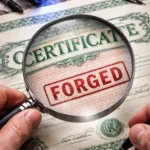
The fake certificates were designed to closely resemble original Periyar University degrees, complete with fabricated registration numbers, examination years, and seals.
Use of Fake Degrees in Employment
The forged degrees were primarily used for job applications in:
Government and semi-government positions
Private sector roles requiring minimum graduation qualifications
Teaching and academic support roles
Promotions within organizations where educational upgrades were mandatory
These fake credentials allowed unqualified individuals to bypass eligibility requirements, undermining merit-based recruitment and disadvantaging genuine candidates.
Tools and Materials Seized by Police
One of the most serious aspects of the case was the seizure of physical and digital tools used for forgery. Authorities recovered:
Counterfeit university seals and stamps
High-resolution printers capable of replicating certificate paper quality
Pre-designed templates matching official degree formats
Digital records containing candidate details and fabricated academic data
The presence of these materials indicated a well-planned and large-scale operation rather than isolated incidents.
Legal Action and Criminal Charges
Individuals involved in the racket faced charges related to forgery, cheating, impersonation, and criminal conspiracy. The use of forged government and university documents is considered a serious offense under Indian law.
Candidates found to have knowingly used fake degrees also faced legal consequences, including:
Termination from employment
Disqualification from future recruitment processes
Criminal prosecution depending on intent and evidence
Permanent damage to professional credibility
Those who unknowingly used fake documents were still required to undergo scrutiny and verification, often leading to job loss even without criminal intent.
Impact on Genuine Periyar University Graduates
The exposure of the fake degree racket affected legitimate graduates of Periyar University as well. Employers and verification agencies began subjecting all certificates to increased scrutiny, leading to:
Delays in job onboarding
Additional verification requirements
Suspicion toward candidates from the same institution
Extended background checks for higher education and promotions
Genuine graduates had to provide additional documentation to prove the authenticity of their degrees.
Institutional and Systemic Challenges
The case highlighted broader systemic challenges in academic document verification, including:
Dependence on physical certificates without real-time verification
Limited awareness among employers about authentication processes
Exploitation of candidates unfamiliar with official procedures
Slow coordination between universities and recruiting authorities
It emphasized the need for digitized records and direct university verification channels.
Preventive Measures and Strengthening Verification
In response to such cases, authorities and institutions emphasized:
Mandatory verification directly from universities
Digitization of academic records and centralized databases
Public awareness campaigns against illegal degree agents
Stricter penalties for document forgery
Improved coordination between law enforcement and educational institutions
Universities reiterated that genuine degrees can only be obtained through formal academic processes and official issuance channels.
Lessons for Job Aspirants
The Periyar University fake degree racket offers important lessons:
No legitimate degree can be obtained without enrollment and examination
Offers promising instant degrees or backdated certificates are fraudulent
Using fake credentials carries lifelong professional and legal risks
Verification systems are becoming stricter across all sectors
Academic integrity is essential for sustainable career growth
Broader Implications for Employment and Education
Academic fraud weakens trust in educational institutions and damages the employment ecosystem. When fake degrees circulate, employers lose confidence, recruitment processes become more rigid, and deserving candidates face additional barriers.
Such rackets also tarnish the reputation of public universities that have no role in the fraud but suffer reputational damage.
Conclusion
The Periyar University fake degree racket in Tamil Nadu exposed a serious threat to academic integrity and employment fairness. The seizure of forged seals, printers, and counterfeit certificates revealed the extent to which organized networks can replicate official university documentation.
This case serves as a strong warning to job aspirants, employers, and institutions alike. Academic shortcuts may offer temporary gains, but the long-term consequences include legal action, career collapse, and irreversible reputational harm.