Academic qualifications form the backbone of eligibility in teaching and higher education recruitment. When fake degrees enter this system, the damage goes beyond individual misconduct and directly affects the quality of education delivered to students. The Gulbarga University fake degree scam in Karnataka revealed how forged post-graduate certificates were allegedly produced and supplied by private agents, enabling unqualified candidates to apply for and secure teaching positions.
This case came to light during verification stages of teaching recruitment, where authorities uncovered serious inconsistencies in post-graduate degree certificates claimed to be issued by Gulbarga University. What began as routine scrutiny soon exposed an organized racket operating near examination centers and targeting aspirants seeking shortcuts into academic careers.
Background of the Case
Gulbarga University is a recognized public university offering undergraduate, post-graduate, and research programs across disciplines. Its post-graduate degrees are widely accepted for teaching eligibility, promotions, and higher academic pursuits.
The scam surfaced when candidates applying for lecturer and teaching posts submitted post-graduate certificates that failed verification. Recruitment authorities noticed irregularities in academic timelines, enrollment numbers, and examination records, raising concerns about the authenticity of the documents.
How the Fake Degree Scam Was Uncovered
Verification During Teaching Recruitment
The exposure occurred during document verification for teaching recruitment, a stage that involves careful scrutiny of post-graduate qualifications. Authorities cross-checked degree certificates, marksheets, and academic progression details submitted by candidates.
Several certificates could not be authenticated against official university records. In many cases, there were no corresponding admission details, internal assessment records, or examination entries linked to the claimed degrees.
Suspicious Academic Patterns
Investigators observed multiple red flags, including:
Degrees issued without valid examination results
Post-graduate completion timelines that did not align with university regulations
Marksheets showing subjects or grading formats inconsistent with the relevant academic years
Similar formatting and serial patterns across certificates submitted by different candidates
These patterns suggested organized production rather than isolated document tampering.
Role of Private Agents Near Examination Centers
Police investigations pointed toward the involvement of private agents operating near examination centers and academic hubs. These agents allegedly targeted students and job aspirants, offering post-graduate degrees without the need to complete coursework, attend classes, or appear for examinations.
Candidates were reportedly told that proximity to exam centers and access to academic environments made the certificates appear credible. In exchange for money, forged degrees and marksheets were supplied, often accompanied by fabricated narratives about enrollment and examination attendance.
This exploitation of academic spaces made the racket particularly concerning.
Police Investigation and Legal Action
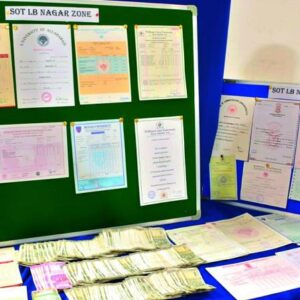
Following complaints from recruitment authorities, law enforcement agencies launched investigations into the matter. Police examined the forged certificates, traced their origin, and questioned candidates and intermediaries involved.
During the investigation, authorities focused on:
Identifying individuals producing and distributing forged documents
Establishing links between agents and multiple candidates
Tracing financial transactions related to certificate procurement
Determining whether any institutional data had been misused
Police registered cases against agents on charges related to forgery, cheating, impersonation, and criminal conspiracy. Candidates found to have knowingly used fake degrees were also subjected to legal scrutiny.
Impact on Teaching Recruitment
Threat to Educational Standards
The use of fake post-graduate degrees in teaching recruitment poses a serious threat to academic quality. Teaching positions require subject expertise, research exposure, and pedagogical understanding, all of which are compromised when unqualified individuals enter the system.
Disqualification and Appointment Cancellations
Several candidates were disqualified during recruitment, and appointments already made were canceled after verification failures. This resulted in delays in filling teaching positions and increased administrative workload for recruitment bodies.
Consequences for Candidates Using Forged Degrees
Candidates implicated in the scam faced severe consequences, including:
Immediate disqualification from recruitment processes
Termination from teaching positions already secured
Blacklisting from future academic recruitment
Criminal proceedings under forgery and fraud laws
Authorities made it clear that reliance on agents or claims of ignorance does not exempt candidates from responsibility when forged credentials are used.
Impact on Genuine Gulbarga University Graduates
One of the unintended outcomes of the scam was increased scrutiny of genuine Gulbarga University post-graduate degrees. Legitimate candidates reported longer verification timelines and additional documentation requirements, even when their academic records were authentic.
This highlights how academic fraud disproportionately affects honest students and alumni.
Broader Issue of Fake Degrees in Higher Education Recruitment
The Gulbarga University fake degree scam reflects a broader issue across several states, where teaching and academic recruitment is targeted by fraud networks. High competition, eligibility pressures, and lack of awareness make aspirants vulnerable to such schemes.
As verification systems improve, these rackets are increasingly exposed, but the damage caused before detection can be significant.
Importance of Academic Verification
This case underscores the importance of primary-source academic verification in teaching recruitment. Reliance on submitted documents alone is insufficient in roles that shape future generations.
Direct confirmation from universities, authenticated transcripts, and digital record systems are essential tools in preventing such fraud.
Lessons for Students, Recruiters, and Institutions
For Teaching Aspirants
The case serves as a clear warning that academic shortcuts can permanently damage careers. Teaching requires genuine learning, not just paper qualifications.
For Recruitment Authorities
Strict and uniform verification processes are critical, especially for post-graduate degrees used for teaching eligibility.
For Universities
Institutions must safeguard academic records, monitor misuse of their name, and cooperate closely with authorities to prevent exploitation of their credentials.
Conclusion
The Gulbarga University fake degree scam in Karnataka exposed how forged post-graduate certificates were misused in teaching recruitment through networks of private agents operating near examination centers. Detected during verification, the scam led to police investigations, arrests, and disqualification of candidates.
This case reinforces a fundamental principle: academic integrity is central to the credibility of education systems. Teaching roles demand authentic qualifications earned through legitimate study and assessment. Any attempt to bypass this process not only harms individual careers but also weakens the foundation of education itself.