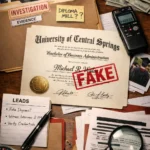
Government jobs in India represent stability, public trust, and responsibility. These positions are meant to be filled through merit, verified qualifications, and transparent recruitment processes. However, a major fake degree scam uncovered in Uttar Pradesh revealed how forged educational certificates were systematically used to secure government employment. The case, investigated by the Uttar Pradesh Special Task Force, exposed a well-organized racket that supplied fake degrees and mark sheets to job seekers, enabling them to bypass eligibility requirements and enter public service illegally.
The recovery of over 900 forged mark sheets and the arrest of multiple accused highlighted the alarming scale of academic fraud infiltrating government recruitment systems.
Background of the Fake Degree Racket
The fake degree racket operated quietly across several districts of Uttar Pradesh. It catered primarily to individuals seeking government jobs that required specific educational qualifications, such as graduation degrees, professional diplomas, or distance education credentials.
The racket allegedly forged certificates from reputed universities, including open and distance learning institutions, to make the documents appear credible during recruitment verification. The involvement of recognized university names increased the chances of the forged documents escaping initial scrutiny.
Role of Forged Degrees in Securing Government Jobs
The forged certificates were used in recruitment for various government departments, including education, clerical services, technical posts, and administrative roles. In many cases, candidates were able to clear document verification stages and secure appointments before the fraud was detected.
These illegal appointments compromised the integrity of public institutions and denied genuine candidates their rightful opportunities.
Detection and Intelligence Inputs
The scam came to light after discrepancies were noticed during routine verification exercises and departmental audits. Authorities observed inconsistencies such as:
Mismatch between enrollment numbers and university records
Degrees issued without minimum course duration
Identical formatting across multiple certificates
Suspicious timelines showing rapid qualification completion
Based on these red flags, intelligence agencies alerted the Uttar Pradesh Special Task Force, which initiated a detailed investigation.
UP STF Investigation and Raids
The Special Task Force conducted coordinated raids across multiple locations suspected to be involved in the racket. Surveillance, document analysis, and digital tracking were used to identify the individuals responsible for producing and distributing forged certificates.
During the raids, investigators recovered:
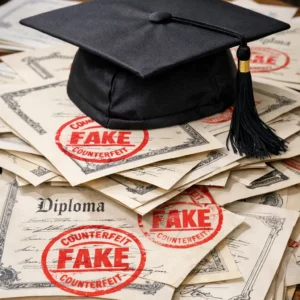
Over 900 fake mark sheets
Forged degree certificates
Fake seals and stamps of universities
Computers, printers, and scanning devices
Digital records of transactions and client lists
The seized materials confirmed the existence of an organized and ongoing operation.
Arrests and Criminal Charges
Several individuals were arrested for their alleged roles in the fake degree racket. The accused included document fabricators, intermediaries, and coordinators who connected job seekers with the forgery operation.
They were booked under criminal provisions related to cheating, forgery, use of forged documents, and criminal conspiracy. Investigations also focused on identifying beneficiaries who had used these forged certificates to obtain government jobs.
Involvement of Distance Education Degrees
A notable aspect of the scam was the misuse of distance education and open university degrees. These programs, while legitimate when properly completed, were exploited by fraudsters due to delayed verification processes and limited access to centralized records.
The racket allegedly produced certificates that mimicked genuine distance education degrees, making detection more difficult during initial screening.
Impact on Government Recruitment
The exposure of the scam led to widespread review of recruitment processes across government departments in Uttar Pradesh. Authorities initiated re-verification drives to identify employees who may have secured jobs using forged qualifications.
In several cases, appointments were cancelled, services were terminated, and disciplinary proceedings were initiated. The scam caused delays in recruitment cycles and increased administrative burdens.
Consequences for Beneficiaries
Individuals who used fake degrees faced serious consequences, including:
Termination from government service
Permanent disqualification from future government jobs
Criminal prosecution
Loss of pension and service benefits
Damage to personal and professional reputation
The case reinforced that ignorance of forgery does not absolve responsibility when forged documents are used.
Role of Middlemen and Agents
The investigation revealed the critical role played by middlemen and agents who marketed fake degrees as guaranteed solutions for government jobs. These agents approached candidates who had failed eligibility criteria or examinations, offering forged certificates in exchange for substantial payments.
This network helped normalize illegal practices and expanded the reach of the scam across multiple regions.
Challenges in Preventing Academic Fraud
The scam exposed several systemic weaknesses, including:
Reliance on physical certificates
Delayed verification from universities
Lack of centralized academic databases
High competition for limited government jobs
Fraudsters exploited these gaps to infiltrate recruitment systems undetected for extended periods.
Steps Toward Strengthening Verification
Following the crackdown, authorities emphasized stricter verification protocols. Government departments were encouraged to verify academic records directly from issuing institutions and use digital authentication systems wherever possible.
The need for real-time verification and inter-departmental coordination was highlighted as essential to preventing future fraud.
Lessons for Job Aspirants
The UP fake degree scam serves as a clear warning to job seekers:
Using forged certificates is a criminal offense
Shortcuts to government employment can lead to permanent career loss
Fake qualifications can be detected even years after appointment
Genuine education is the only secure foundation for public service careers
Aspirants must rely on merit, preparation, and authentic qualifications.
Broader Implications for Public Trust
Public institutions depend on trust and competence. When individuals enter government service using fake degrees, it undermines confidence in governance and service delivery.
The case highlighted the need for constant vigilance and accountability to protect the credibility of public employment systems.
Conclusion
The UP fake degree scam exposed a deeply organized racket that supplied forged educational certificates to help individuals secure government jobs illegally. The recovery of over 900 fake mark sheets and the arrests made by the Special Task Force demonstrated the seriousness with which authorities are now addressing academic fraud.